

Get pumped!
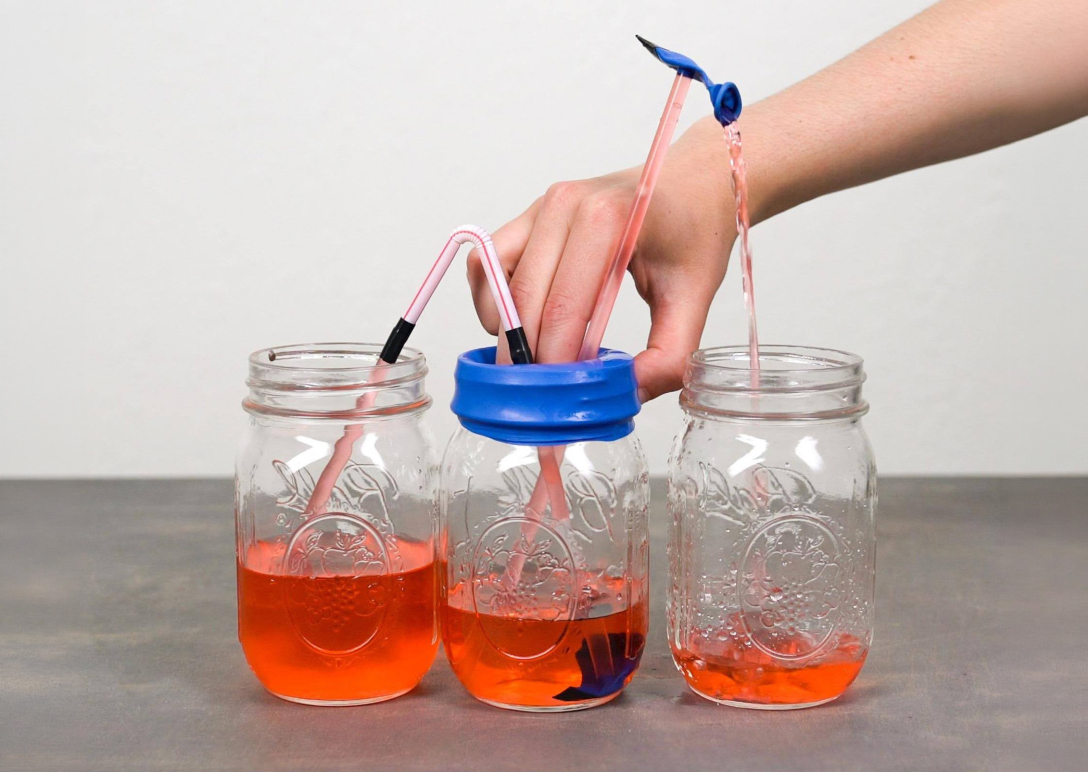
Curious about how your heart pumps blood? Use this model to learn about the right atrium and ventricle!
How to Prepare
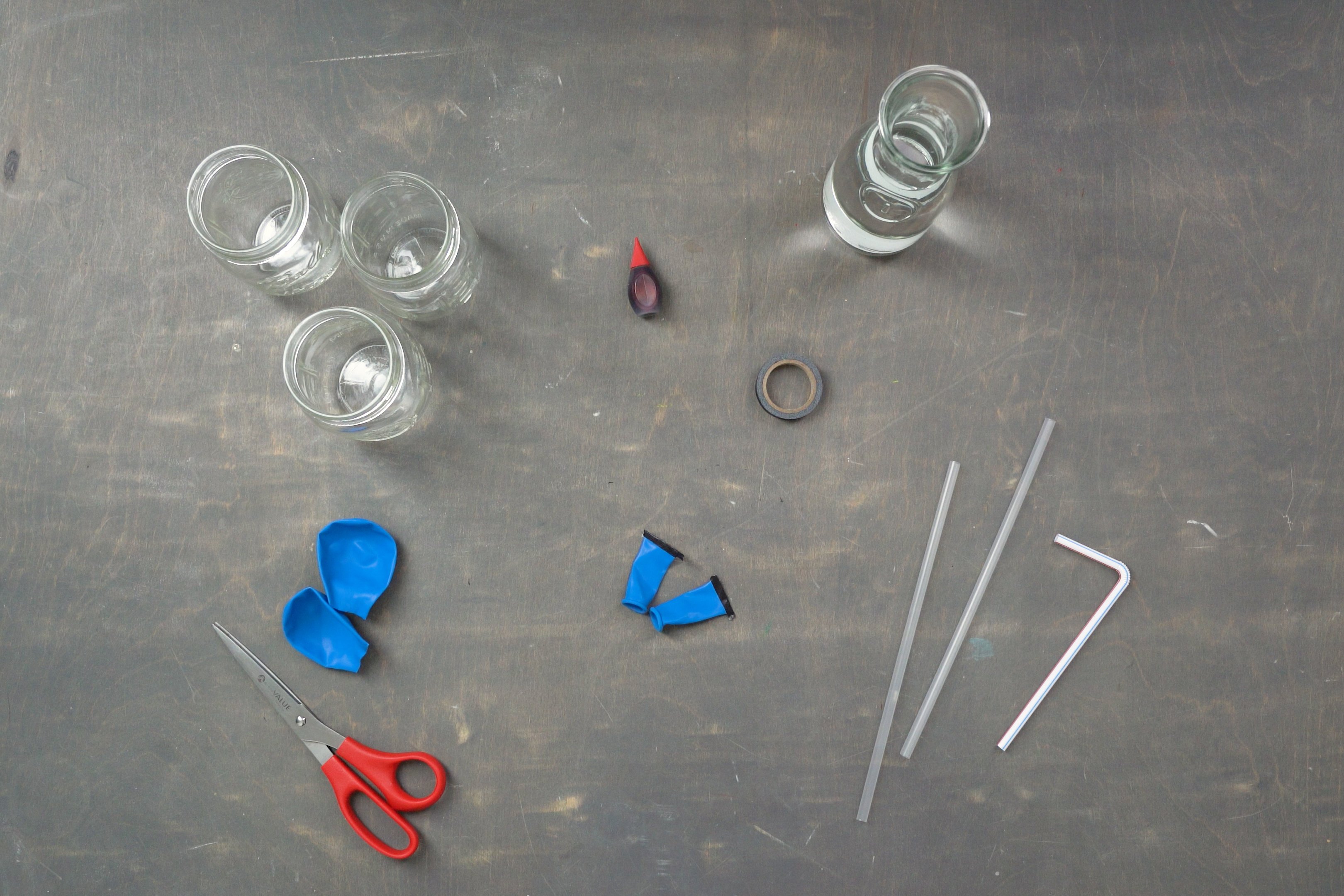
Gather these items before you start:
- 3 cups or jars
- 2 balloons
- 2 clear straws
- 1 bendy straw
- Water
- Red food colouring
- Scissors
- Tape
Make a Pumping Heart
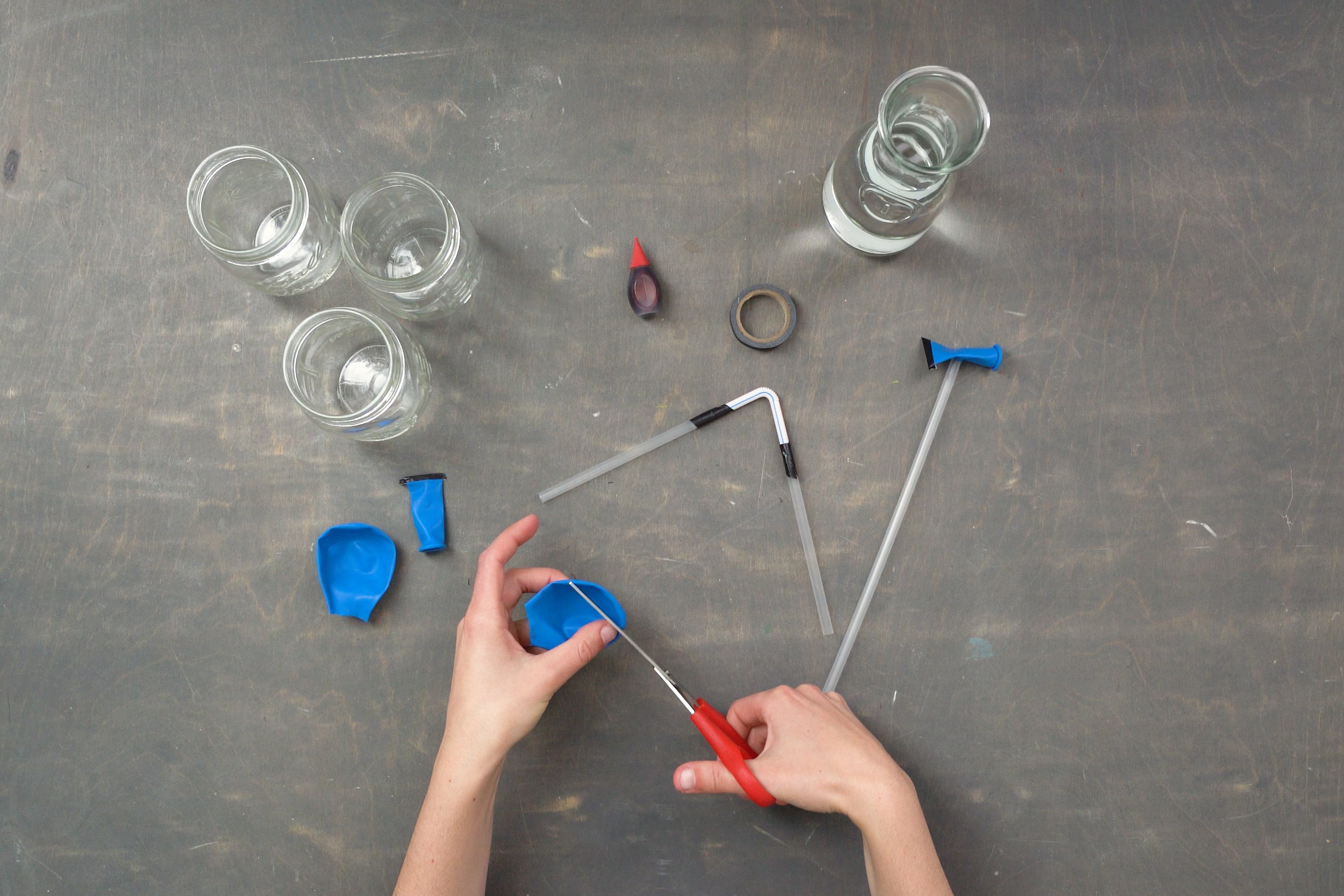
1. Cut the neck off of two balloons. Then, tape the cut end of each balloon neck closed.
2. Cut a very small slit (big enough to insert a straw) in the neck of each balloon about ½ inch below where you taped. Then, insert a clear straw into the slit of one balloon. Set the other balloon neck aside.

3. Cut the bendy straw so that there is about 1 ½ inches of straw on either side of the bend. Then, cut the other clear straw in half.
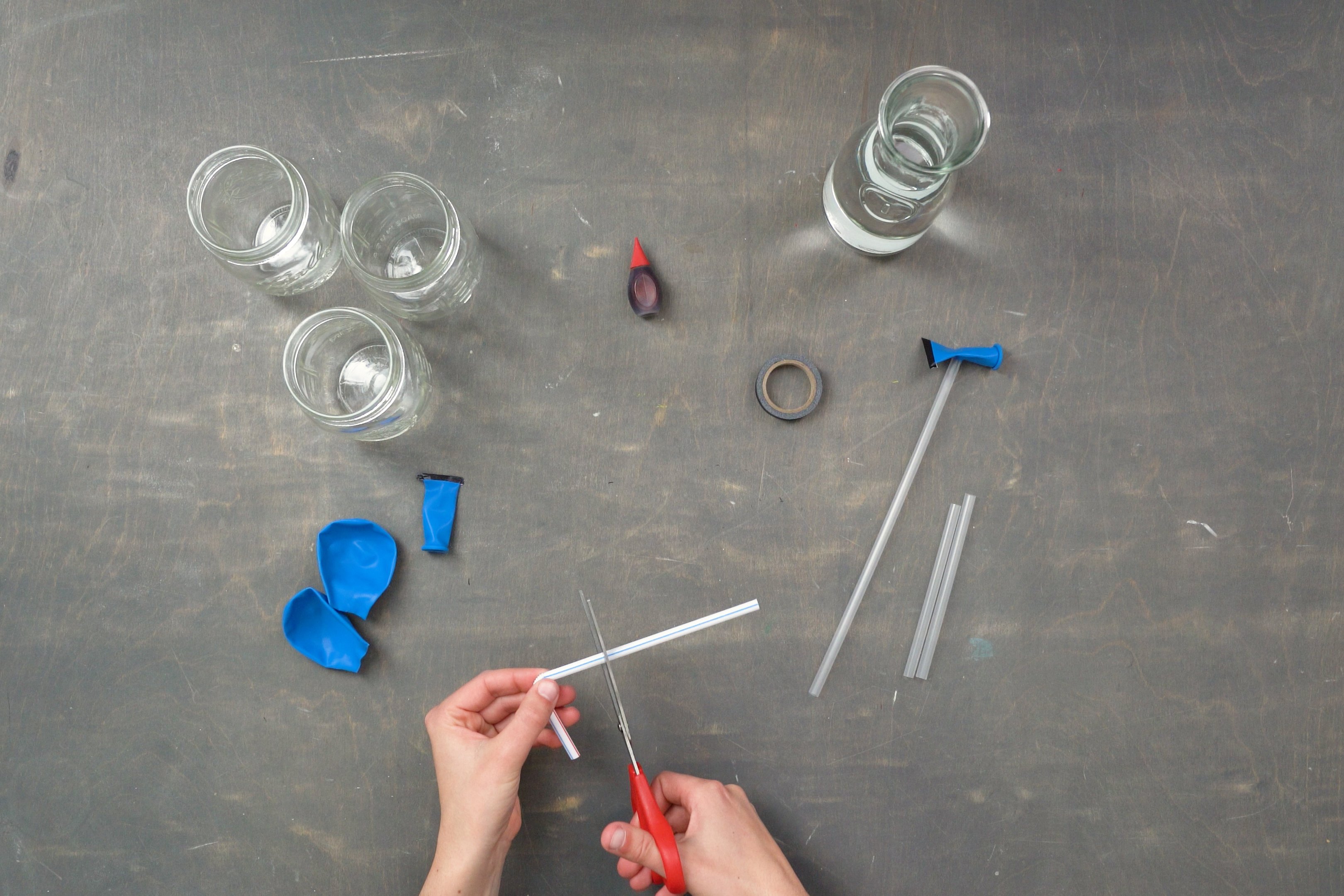
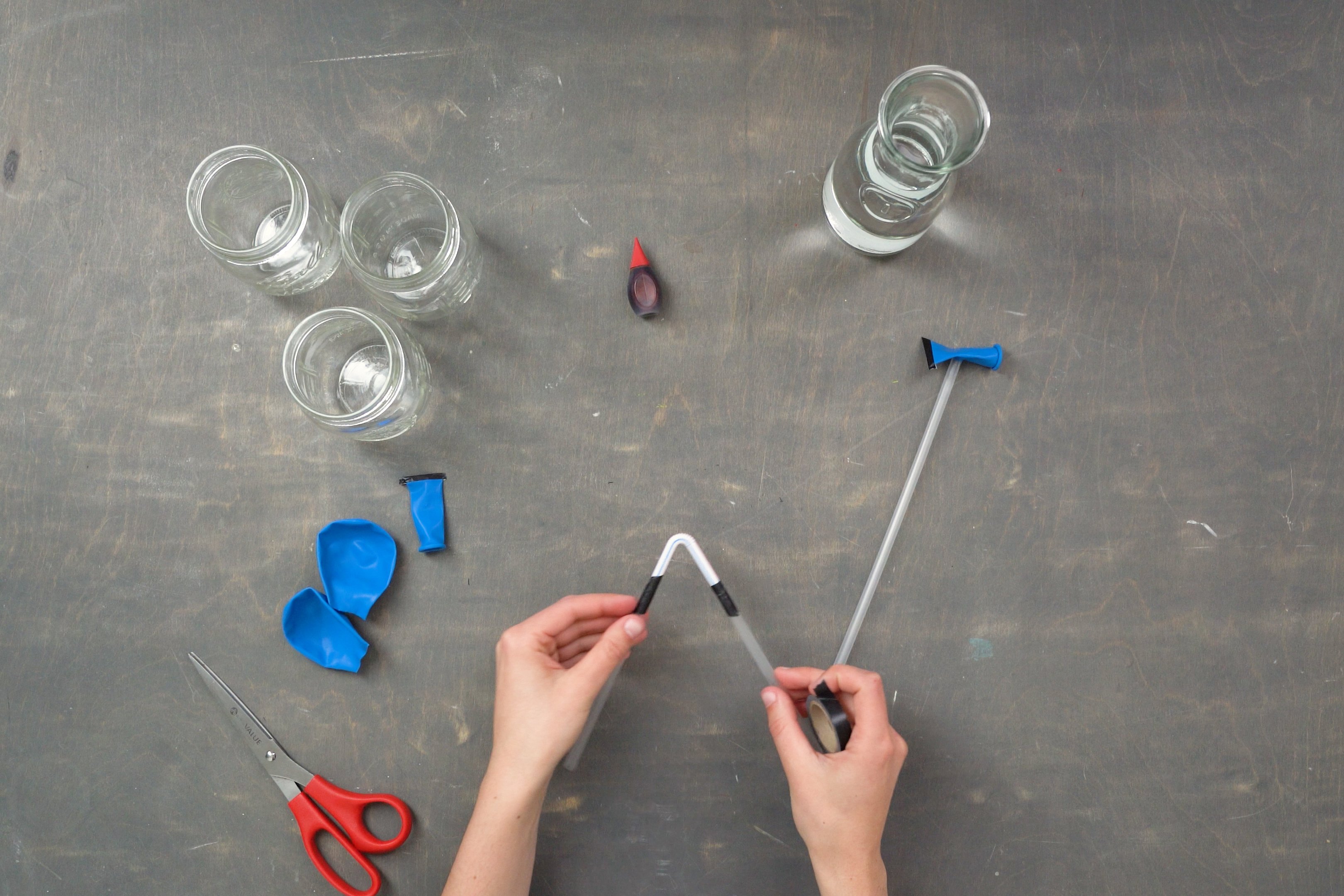
4. Tape the bendy straw in between the two half-length straws.
5. Cut two small slits directly across from one another near the top of one of the balloon tops.
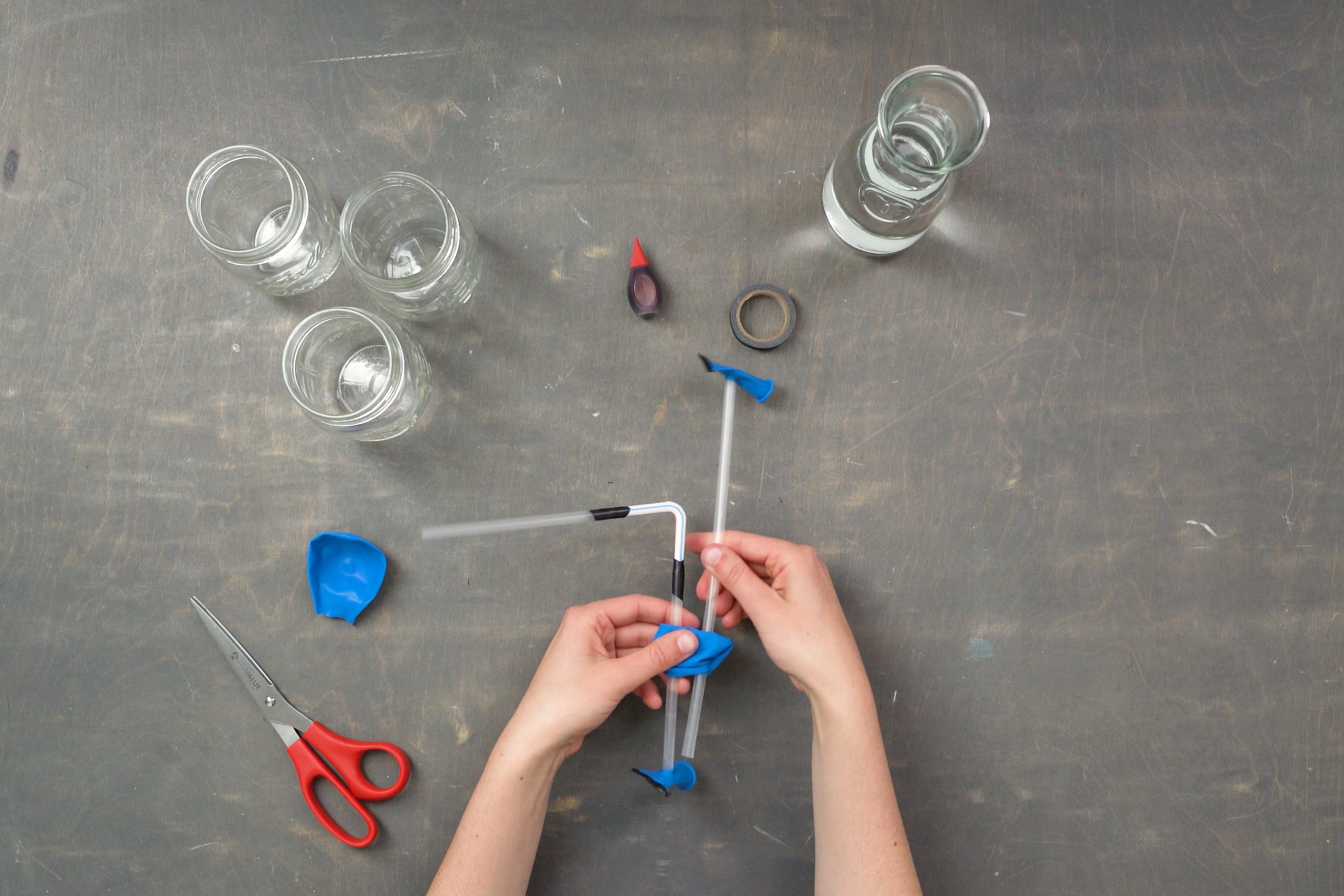
6. Insert the long straw and the bendy straw into the two slits.
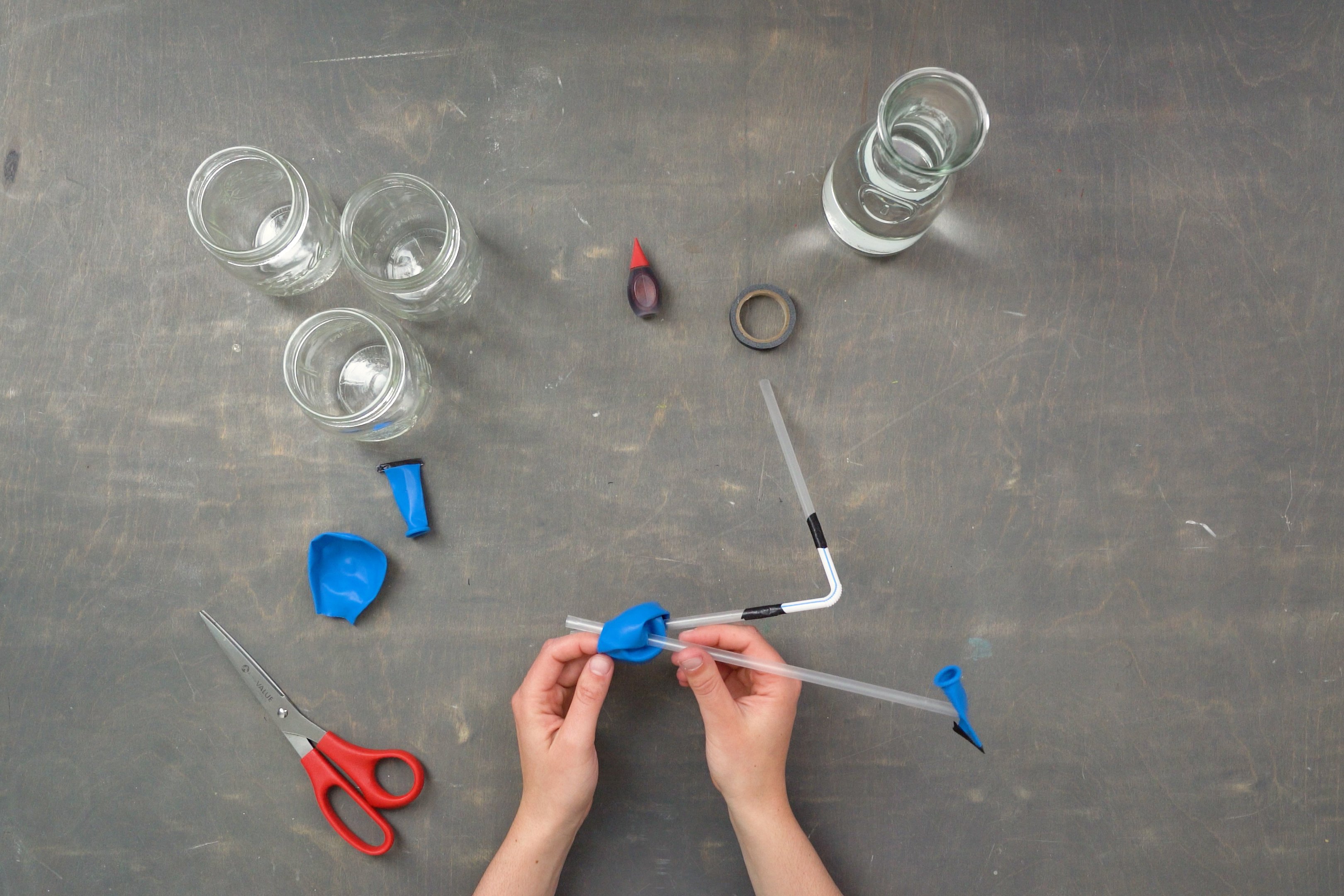
7. Insert one of the half-length straws from the bendy straw into the slit of the balloon neck you set aside in step 2.
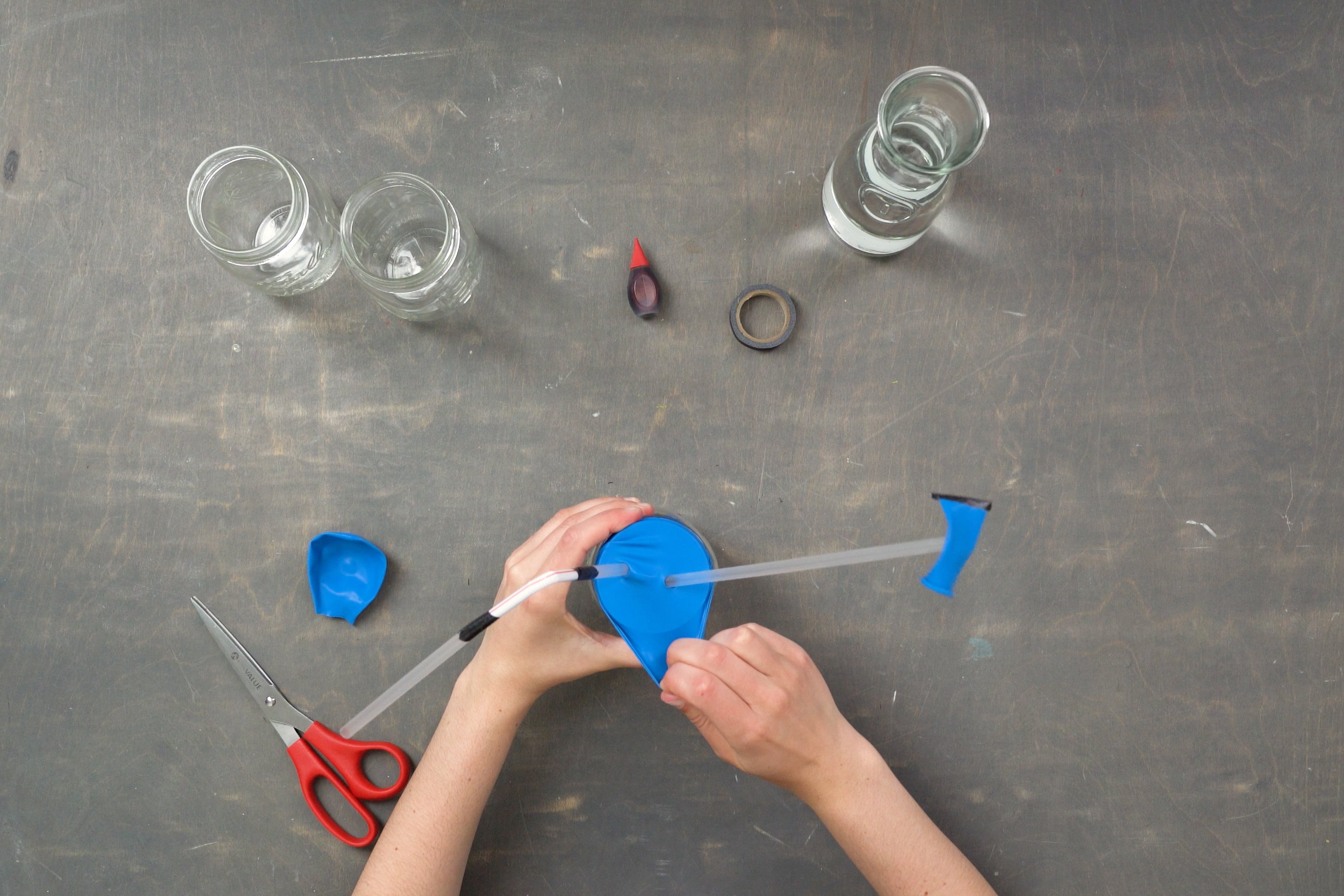
8. Stretch the balloon over the top of the small container with both straws inside of it. The balloon should be as tight as possible – just like a trampoline.
9. Fill one of the cups about ¾ full with water. Then, drip about 5 drops of red food colouring into it.

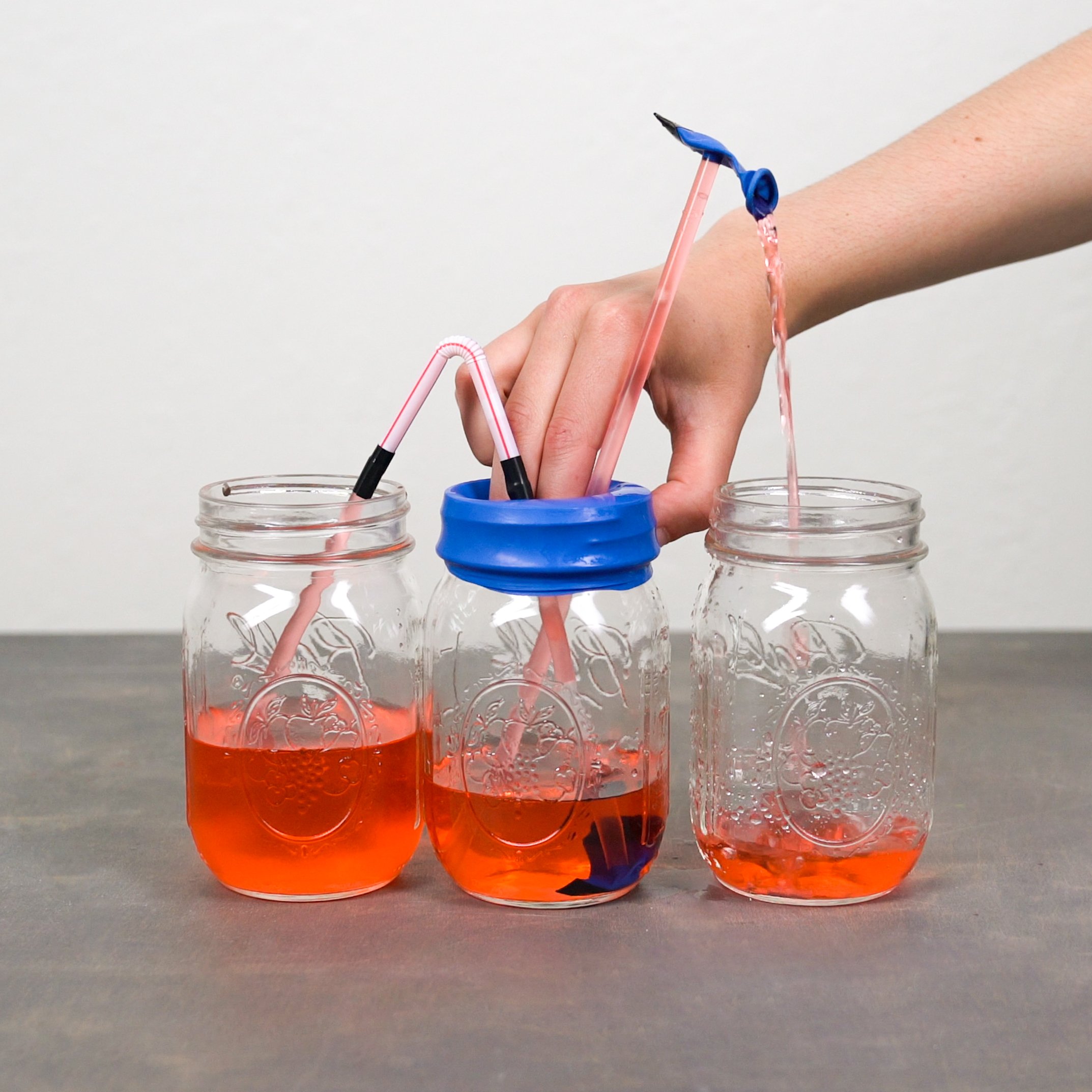
10. Place the cup filled with water on the other end of the bendy straw and the empty cup underneath the other straw. Then, push down on the balloon and watch what happens! This is how the valves in your heart work. This particular model shows the right ventricle “receiving” oxygen-poor blood from the right atrium through the tricuspid valve and pumping it to the body through the pulmonary valve.
What’s Going On?
If you’ve ever squeezed your hands together to shoot pool water, you’re familiar with the basics of how your pumping heart works! Blood carries oxygen on it, and all the parts of your body need oxygen to work right. In order to keep your blood flowing in the right direction, your heart has two pretty cool design features: chambers and valves.
The chambers fill with blood, then squeeze tight to pump it out. Each side of your heart has an entry chamber called an atrium and an exit chamber called a ventricle (making four chambers total). The entry and exit chambers pump one after the other to push your blood forward. Each chamber also has an exit door called a valve – these keep blood from getting pumped backwards.
When the ventricle contracts, the atrium’s exit valve closes so blood won’t push back into it. When the ventricle relaxes, its own exit valve closes to keep blood from spilling backwards into it. That way, the pumping of each chamber moves your blood forward!
Thank you to KiwiCo for this experiment! https://www.kiwico.com/diy/stem/anatomy-biology/pumping-heart